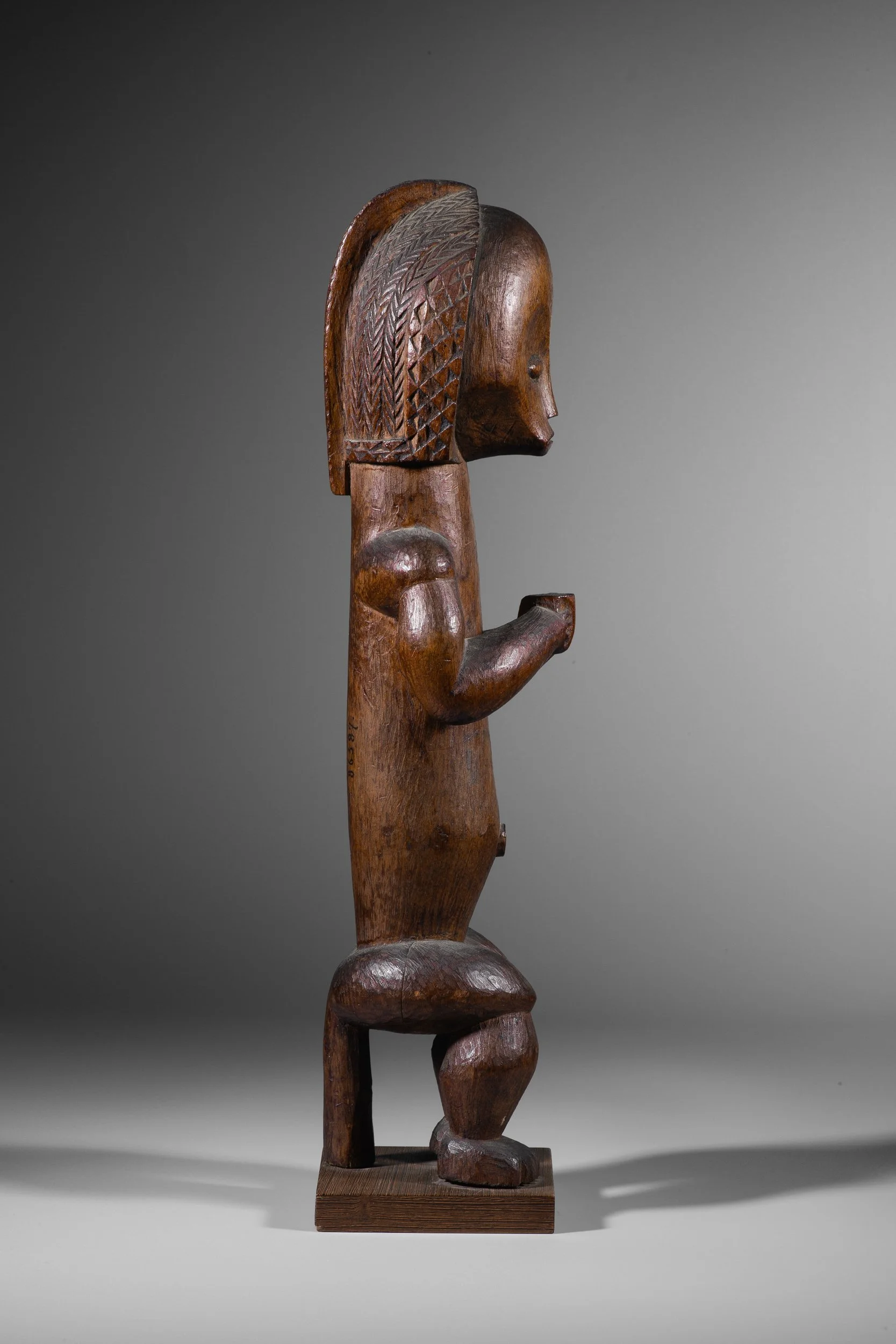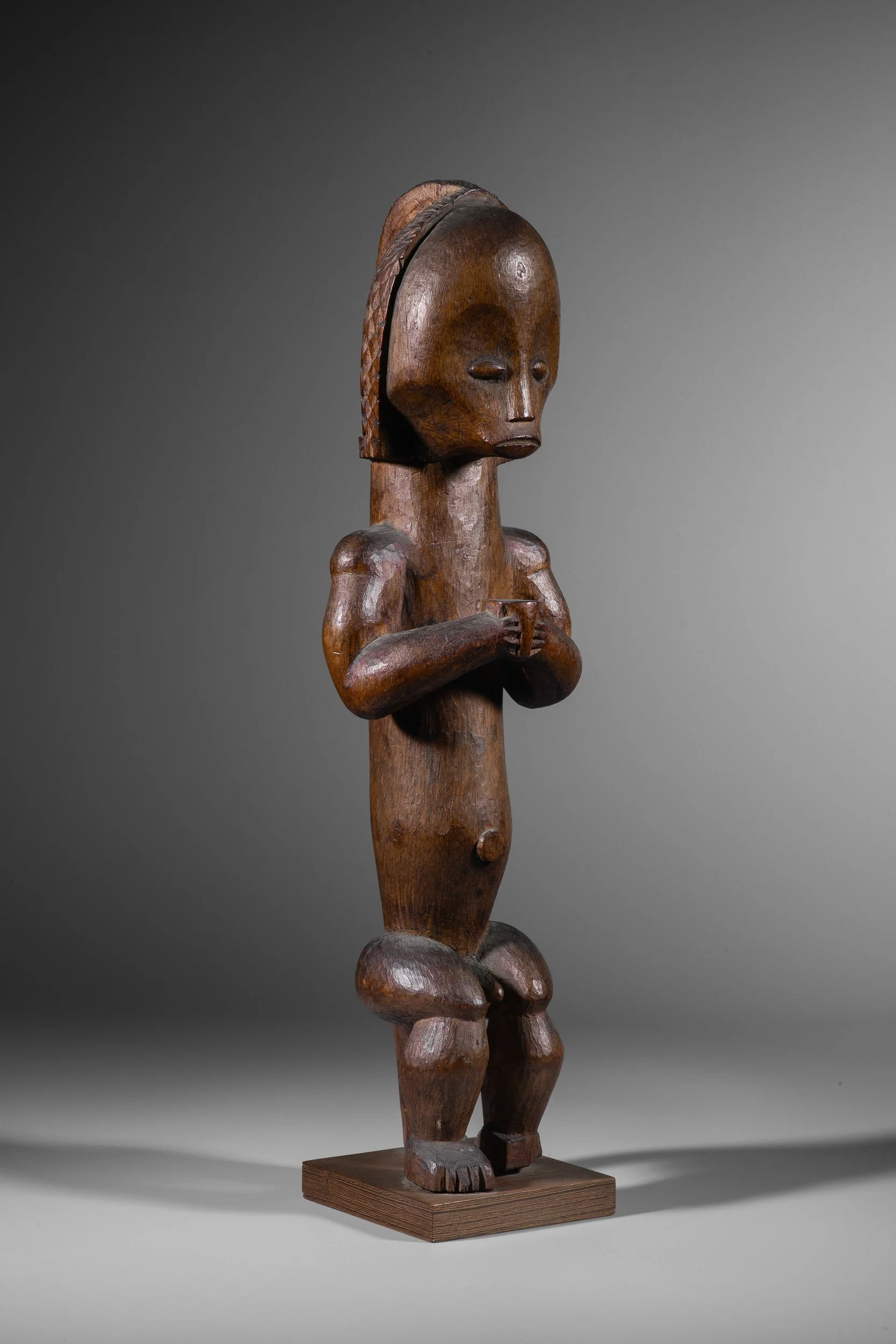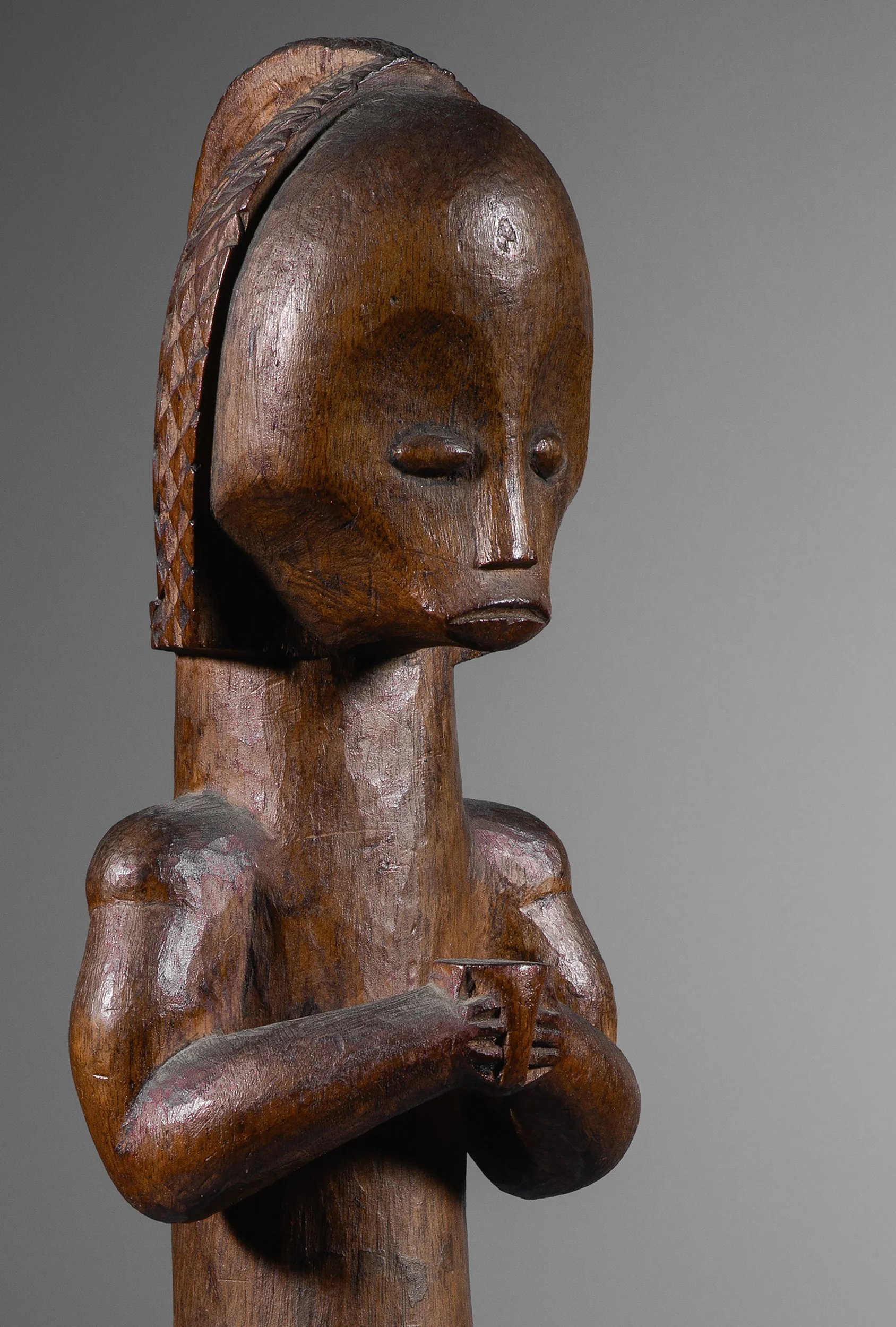
FANG
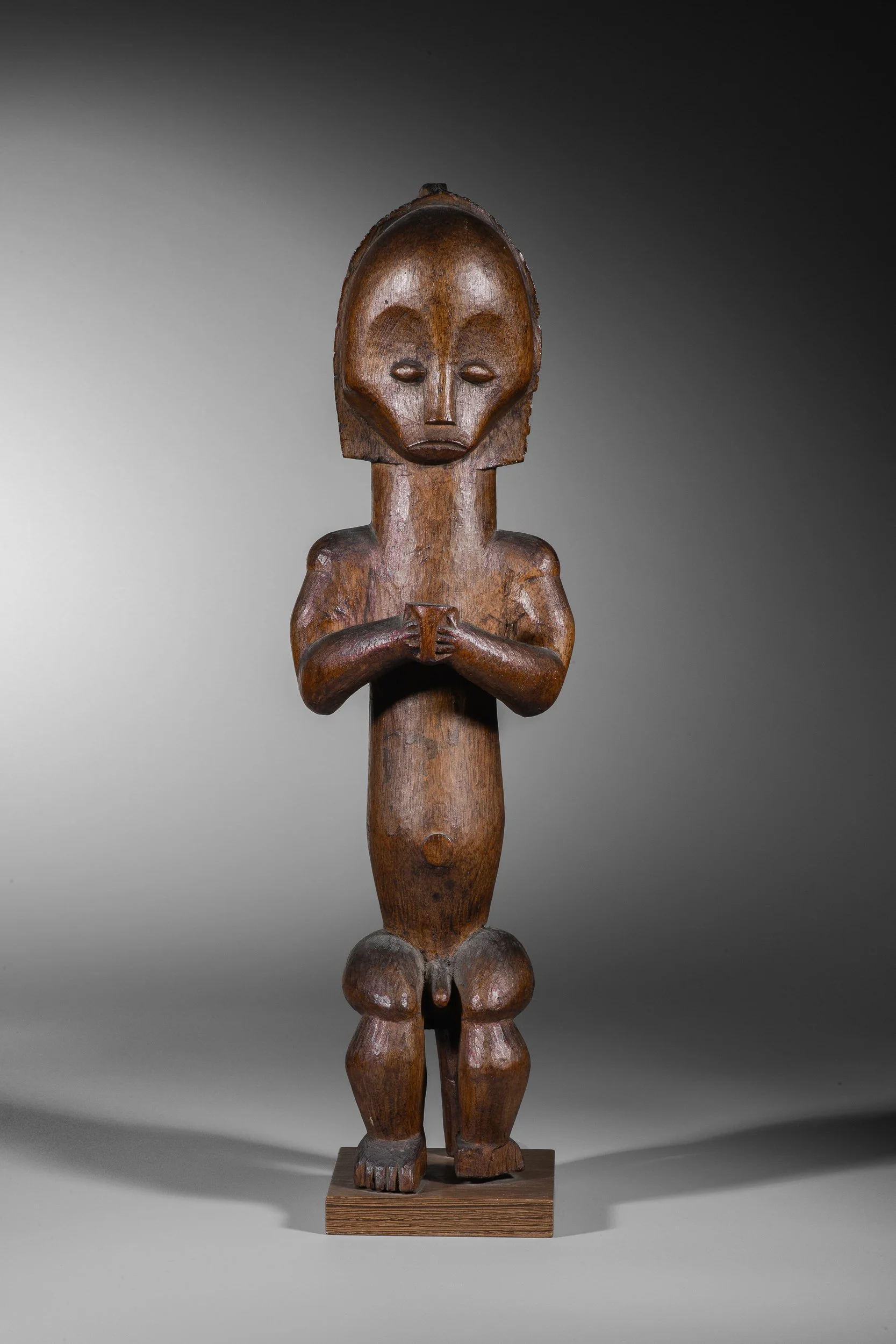
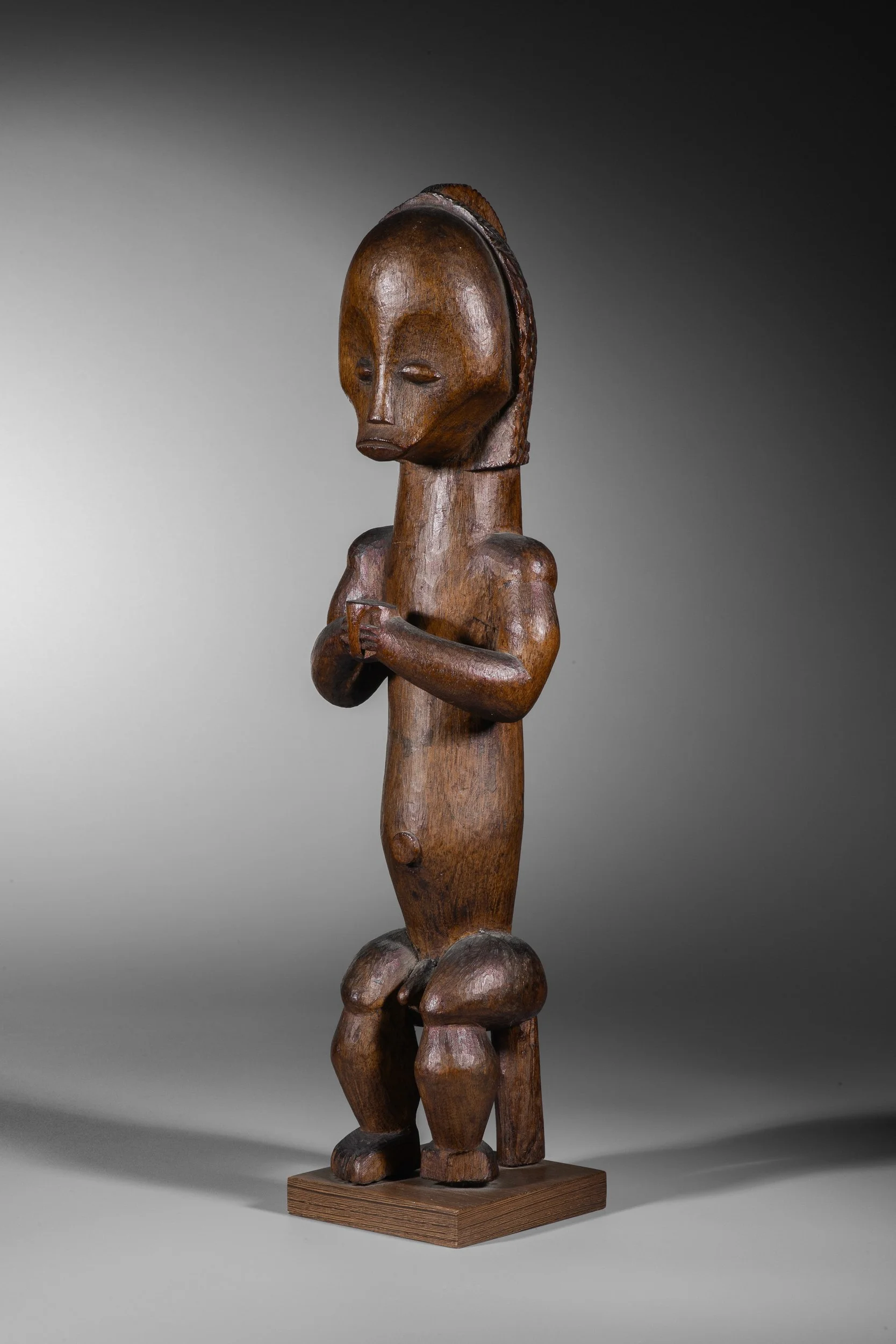
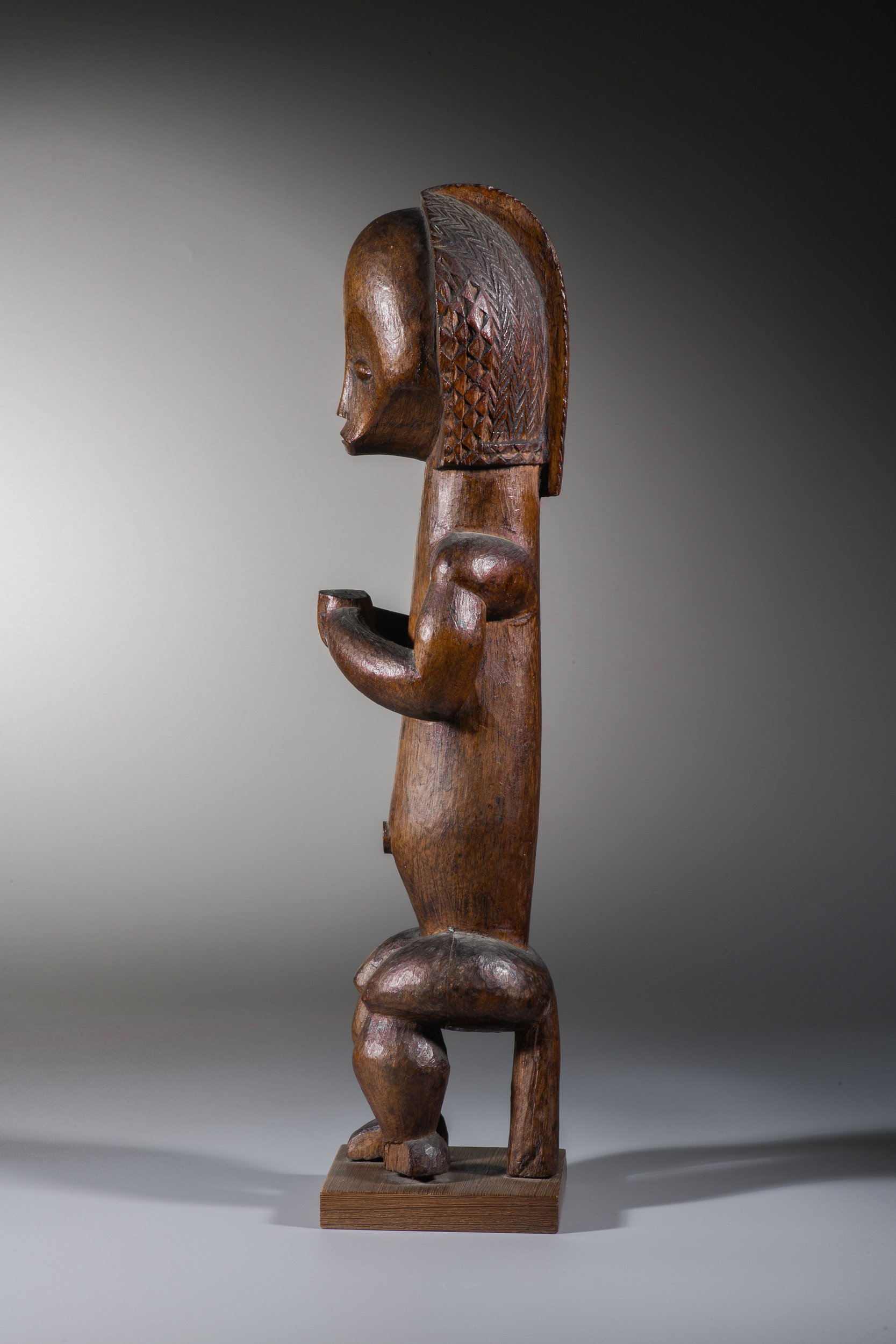
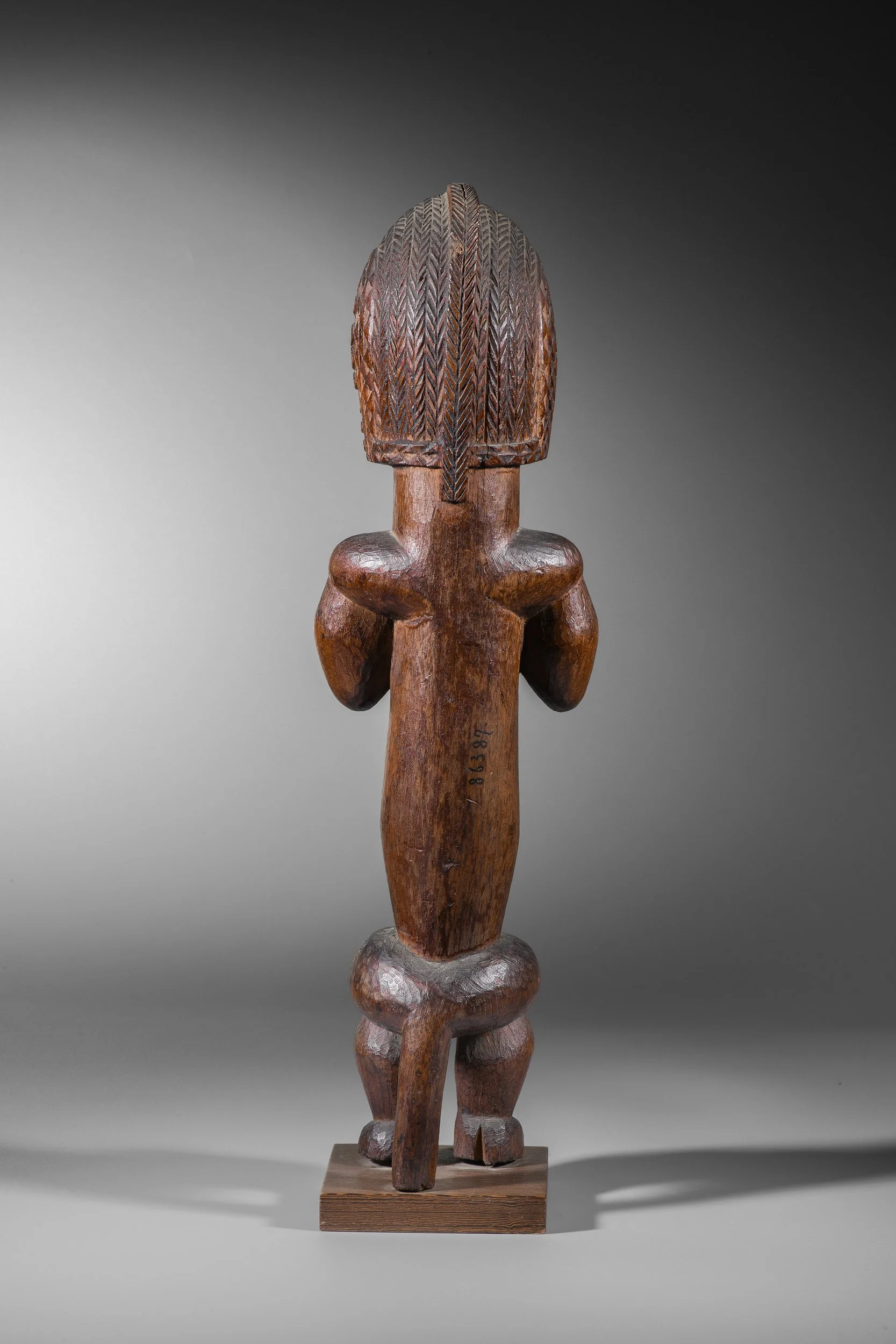
RELIQUARY FIGURE
The figure was most likely acquired around 1890–91 by Gustav Pahl, who at the time served as a customs administrator in Kamerun. It entered the Linden Museum only in 1913, suggesting it had remained in Pahl's personal possession for a prolonged period beforehand.
The object is connected to a clearly documented colonial-historical context through Pahl's close personal relationship with Rudolf Duala Manga Bell. Bell was the later king of the Duala and one of the most prominent figures of anti-colonial resistance in Kamerun. At the request of Bell's family, Pahl brought the young Rudolf with him to Germany and helped oversee his education in Europe. Manga Bell subsequently lived with families from Pahl's own social circle and later studied law before returning to Kamerun. Initially supportive of the German colonial administration, he eventually turned the instruments of European law against the disenfranchisement and dispossession of his people. He was executed in 1914 following a political show trial. The figure is therefore not only an early Fang object with exceptional provenance, but a quiet historical testimony to these colonial entanglements.
At the same time, the figure belongs to a comparatively small and clearly defined collecting context within the history of German colonial-era museum collections. Statistical assessments carried out by the Linden Museum indicate that only a minor percentage of its holdings derives from administrative officials and civilian colonial personnel, rather than from military campaigns, punitive expeditions, or direct colonial seizures. The present figure belongs to this smaller group.
The surface had apparently already been largely stripped of its ritual patina at a very early stage — presumably either in Africa or shortly after its arrival in Europe. Historical photographs from the Linden Museum already show the figure in this condition. Minor traces of older surface layers nevertheless remain. Under warmer temperatures, slight oily residues occasionally emerge from the wood.
Ngumba or Ntumu, mid to late 19th century
Southeastern Cameroon, Kribi 1890
Wood, traces of patina, 43 cm
Historical photo: 1913
PROVENANCE
Gustav Pahl, Kamerun, ca. 1890 / Linden Museum Stuttgart, inv. no. 86387 (accessioned 1913) / exchanged to Jan Lüders, 17 June 1969 / Boris Kegel-Konietzko, Hamburg / Dieter Blume, Braunschweig
PUBLISHED
AHRDRC: ao-0212962
LAST MARKET APPEARANCE: 1970
PRICE ON REQUEST
> > > POST-DELIVERY-PRICING < < <
For delivery to your address, a deposit of 50% is sufficient. The balance will be negotiated when you have the artwork in your hands. So far we have always reached an agreement. However, if not, we will provide you with a prepaid return label and refund your deposit immediately.
Don’t miss your chance to get this piece at a price that feels good for you!